
==> Thank you for reading this post! Click Here If you are looking for support and Victory over PTSD.
Worship can trigger PTSD symptoms when music, prayer, physical closeness, religious language, authority figures, or loss of control resemble elements of a traumatic experience. The nervous system may react with panic, dissociation, intrusive memories, freezing, or an urgent need to leave even when the present setting is safe. Immediate priorities are to reduce stimulation, regain orientation, move toward an exit or trusted person, and avoid interpreting the reaction as spiritual failure. Longer-term options may include changing how you participate, setting boundaries with faith leaders, and discussing recurring reactions with a licensed trauma-informed mental health professional.
Why Can Worship Activate Trauma Responses?
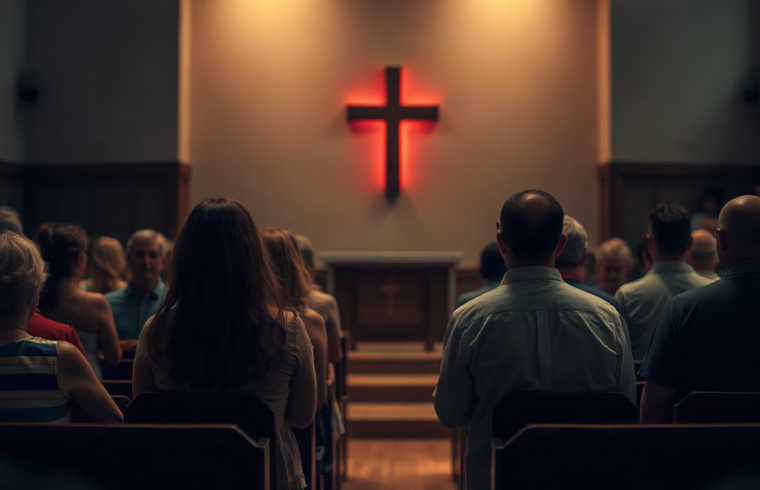
A worship setting can contain several cues that the nervous system associates with danger, even when no one else notices a threat. Loud music may resemble shouting or chaos. A crowded aisle may create a sense of being trapped. Being asked to close your eyes, bow your head, kneel, accept touch, or surrender control may feel unsafe to someone whose trauma involved coercion, confinement, assault, combat, abuse, or misuse of religious authority.
PTSD reactions are not limited to clear memories. The body may respond first through a racing heart, shallow breathing, nausea, shaking, numbness, muscle tension, or a sudden urge to escape. A person may not immediately connect the reaction to a drumbeat, a phrase about obedience, a leader standing too close, or people moving behind them. The cue does not need to reproduce the original event exactly; resemblance in sound, posture, power dynamics, or lack of choice may be enough to activate an alarm response.
Religious trauma can add another layer. If spiritual language was previously used to excuse abuse, demand silence, threaten punishment, or pressure forgiveness, familiar words may carry meanings that other worshippers do not hear. A sermon about submission, for example, might be intended as theological teaching but experienced as a reminder of coercion. An invitation to approach the front may feel voluntary to the congregation while social pressure makes refusal seem dangerous to a survivor.
The common mistake is to treat distress as proof of weak faith, unwillingness to forgive, or resistance to worship. Those judgments confuse a trauma response with a spiritual conclusion. PTSD symptoms can arise automatically; they do not reliably indicate what a person believes, values, or wants. Prayer may remain meaningful while a particular prayer posture feels intolerable. Community may still matter while a crowded sanctuary exceeds the person’s current capacity.
A useful first step is to examine the setting rather than judging the reaction. Notice whether symptoms appear during specific songs, themes, movements, lighting changes, calls for public participation, or interactions with particular people. Separating the valued activity from its triggering features creates more options: recorded worship instead of amplified music, seated prayer instead of kneeling, a smaller gathering instead of a packed service, or private reflection instead of a public response.
How Can You Recognize a Worship Trigger?
A worship trigger is easier to identify by tracking what happened immediately before the reaction than by searching for a perfect explanation afterward. Relevant details include where you were sitting, what you could hear and see, whether exits were accessible, what language was being used, and whether participation felt optional. The goal is not to prove that a trigger is reasonable. It is to identify repeatable conditions that may help you make safer choices.
Symptoms vary. Hyperarousal may involve sweating, trembling, a pounding heart, scanning the room, irritability, or feeling unable to sit still. Intrusive symptoms may include unwanted images, fragments of memory, or the sense that a past event is happening again. Dissociation may feel like fogginess, unreality, lost time, emotional numbness, or watching the service from outside yourself. Freezing can make speaking, moving, or declining touch unexpectedly difficult.
Consider a person who feels calm during the opening reading but becomes disoriented when the lights dim and bass-heavy music begins. Another person may tolerate music yet panic when doors close for a private prayer session. Someone harmed by a religious leader may react most strongly to a sermon delivered in a commanding tone. These patterns call for different adjustments; leaving all worship indefinitely is not the only option, but forcing repeated exposure without support is not a sound test of faith or resilience.
A short record can clarify the pattern. After you are settled, note the event, the cue you noticed, physical sensations, thoughts or images, what you did, and how long it took to feel oriented again. Avoid turning this into constant self-surveillance during worship, which can increase anxiety. A few observations across separate occasions may be more useful than an exhaustive account of every sensation.
- Possible sensory cues: volume, bass vibration, incense, lighting, bells, microphones, crowded seating, or unexpected touch.
- Possible relational cues: commanding speech, blocked exits, pressure to disclose, public correction, or a leader refusing a boundary.
- Possible spiritual cues: themes of punishment, submission, forgiveness, sacrifice, possession, or divine anger.
- Possible signs of recovery: recognizing the current location, making a choice, communicating a need, and having symptoms gradually settle.
Not every difficult emotion is a PTSD episode, and only a qualified clinician can evaluate symptoms in context. Grief, panic attacks, sensory overload, medication effects, and medical conditions can overlap with trauma reactions. Seek clinical assessment when episodes recur, cause substantial avoidance, involve lost awareness, or disrupt daily functioning. Urgent help is warranted if distress includes immediate danger, inability to remain safe, or thoughts of self-harm.
What Should You Do During a Triggering Service?
During a triggering service, prioritize present-moment safety over completing the ritual or avoiding attention. You are allowed to open your eyes, remain seated, decline touch, move to another location, or leave. Trying to appear composed can consume attention needed for orientation, while pressure to endure may intensify the sense of entrapment that is already driving the response.
Begin with a simple location statement: name the building, the day, and the fact that you can choose what happens next. Look for stable details such as the color of a wall, the shape of a doorway, or the feel of the floor beneath your shoes. If breath-focused exercises make you more aware of panic or bodily memories, do not force them. External grounding—quietly naming visible objects, holding a cool drink, or listening to a trusted person—may be more tolerable.
Movement should be practical rather than performative. Sit near an aisle if that reduces the trapped feeling, step into a quieter lobby, or go outside with a trusted companion. Driving immediately after severe dissociation or disorientation may be unsafe; wait until you are fully oriented or arrange another way home. If a companion helps, agree beforehand on a discreet phrase or signal that means “leave with me” without requiring an explanation in front of others.
A compact response plan can reduce decision-making when symptoms rise:
Get Support and Help with Recovery! Visit us for more Information and Support
- Identify: Name the reaction as a possible trauma response rather than a command you must obey.
- Orient: Locate exits, identify the present date and place, and notice several neutral details around you.
- Reduce exposure: Increase distance from the sound, person, crowd, or activity involved.
- Choose support: Contact a trusted companion, usher, family member, clinician, or crisis service as the situation requires.
- Reassess: Decide whether to return, remain in a quiet space, or leave after symptoms begin settling.
The main failure mode is turning grounding into another demand: “I must calm down quickly so I can go back inside.” Grounding does not guarantee immediate relief, and returning to the room is not the measure of success. A more useful sign is restored choice—being able to notice where you are, communicate a boundary, and decide the next step without coercion.
If church personnel approach, a brief statement may be enough: “I need quiet and space; please do not touch me.” You do not owe an account of your trauma during an episode. Emergency services or a crisis line may be appropriate if you cannot regain basic orientation, face an immediate threat, or believe you may harm yourself or someone else.
How to Return, Set Boundaries, or Step Away
Future participation should be based on safety, consent, and the community’s actual behavior—not pressure to return quickly. Some people benefit from gradual, self-directed re-entry, while others need a different congregation, online participation, private practice, or a complete pause. No single format proves spiritual commitment, and symptom exposure should not be improvised by an untrained leader.
Before returning, identify the smallest workable change. This might mean attending only a quiet portion of the service, choosing a seat with a clear exit, bringing a support person, avoiding a specific prayer line, or asking for the order of service in advance. Predictability can reduce uncertainty, but it cannot remove every trigger. Keep an exit option even when the community has agreed to accommodations.
Requests to leaders are most useful when they are specific and do not require unnecessary disclosure. You might ask that no one touch you without permission, that an usher avoid following you when you step out, or that you receive notice before strobe-like lighting, loud sound, graphic testimony, or a closed-door activity. A leader does not need to understand the whole history to respect a clear boundary.
Pay attention to the response. A safer community listens without demanding details, treats participation as voluntary, and does not frame symptoms as sin, possession, disobedience, or insufficient prayer. Warning signs include publicizing your disclosure, insisting on physical contact, discouraging mental health care, demanding reconciliation with someone who caused harm, or claiming that spiritual authority overrides consent. An apology without changed conduct is not a reliable accommodation.
Trauma-focused treatment with a licensed mental health professional may help when worship reactions are persistent, severe, or connected to wider PTSD symptoms. A clinician who respects the person’s faith can help distinguish valued beliefs from traumatic associations without pushing either religious participation or abandonment. Clergy may provide spiritual care, but pastoral support is not a substitute for clinical assessment when symptoms involve flashbacks, dissociation, major impairment, self-harm risk, or other safety concerns.
Judge an approach by its effects over time. Constructive participation usually preserves choice, allows recovery after activation, and makes boundaries easier to communicate. A failing approach produces escalating dread, repeated shutdown, coercive encounters, or increasing disruption outside worship. If the setting remains unsafe after reasonable requests, stepping away may be the most protective decision. The responsibility for respectful conditions belongs to the community as well as the individual; survivors should not have to tolerate preventable harm to prove readiness.
Frequently Asked Questions
Does being triggered during worship mean my faith is weak?
No. A trauma response is an involuntary alarm reaction and does not establish what you believe or how sincerely you practice your faith.
Should I stay in the service until the symptoms pass?
Not necessarily. Moving to a quieter place or leaving may restore safety and choice more effectively than enduring escalating panic, freezing, or dissociation.
Can I ask a church not to touch me during prayer?
Yes. You can decline laying on of hands, hugs, anointing, or any other contact. A clear request such as “Please ask before touching me” is sufficient.
Is online worship a reasonable alternative?
It can be, especially when control over volume, location, and stopping reduces activation. It may not replace desired community contact, so some people combine it with smaller or less stimulating gatherings.
When should I seek professional help?
Consider a licensed trauma-informed clinician when reactions recur, cause substantial avoidance, involve flashbacks or dissociation, or impair daily life. Seek urgent help for immediate danger or inability to remain safe.
Conclusion
Worship-related trauma reactions deserve careful attention without spiritual judgment. Start by identifying the specific sensory, relational, or religious cues involved, then create a plan that protects movement, consent, and access to support. During an episode, restoring orientation and choice matters more than finishing the service or appearing calm.
For future participation, test only changes you freely choose and evaluate how leaders respond to boundaries. Respectful communities permit people to decline touch, leave without interrogation, and use mental health care without shame. Repeated flashbacks, dissociation, severe avoidance, or impairment are sound reasons to contact a licensed trauma-informed clinician. If a worship environment continues to rely on coercion or dismisses safety requests, stepping away is a legitimate protective decision rather than a personal or spiritual failure.
Get Support and Help with Recovery! Visit us for more Information and Support
Original Source